A 3-Axis Framework for solar Glow Roses Garden Decor
 Priya RamanSenior Analyst
September 14, 2026 — The shift toward low-maintenance, high-impact landscaping has popularized glowing garden decorations, with solar Glow Roses emerging as a central component in modern outdoor design. As homeowners seek to balance ecological footprints with aesthetic appeal, the integration of photo-sensitive technology into floral forms has redefined how nighttime spaces are utilized.
Residential landscape trends increasingly prioritize multi-functional lighting that serves both navigational and decorative purposes without the complexity of hardwired systems. According to the International Dark-Sky Association, responsible outdoor lighting should be useful, targeted, and low-level to minimize light pollution while enhancing safety. This standard provides a baseline for evaluating how decorative elements like solar Glow Roses contribute to a property's nighttime profile without overwhelming the natural environment or the neighborhood's visual harmony.
The Three-Axis Evaluation Model
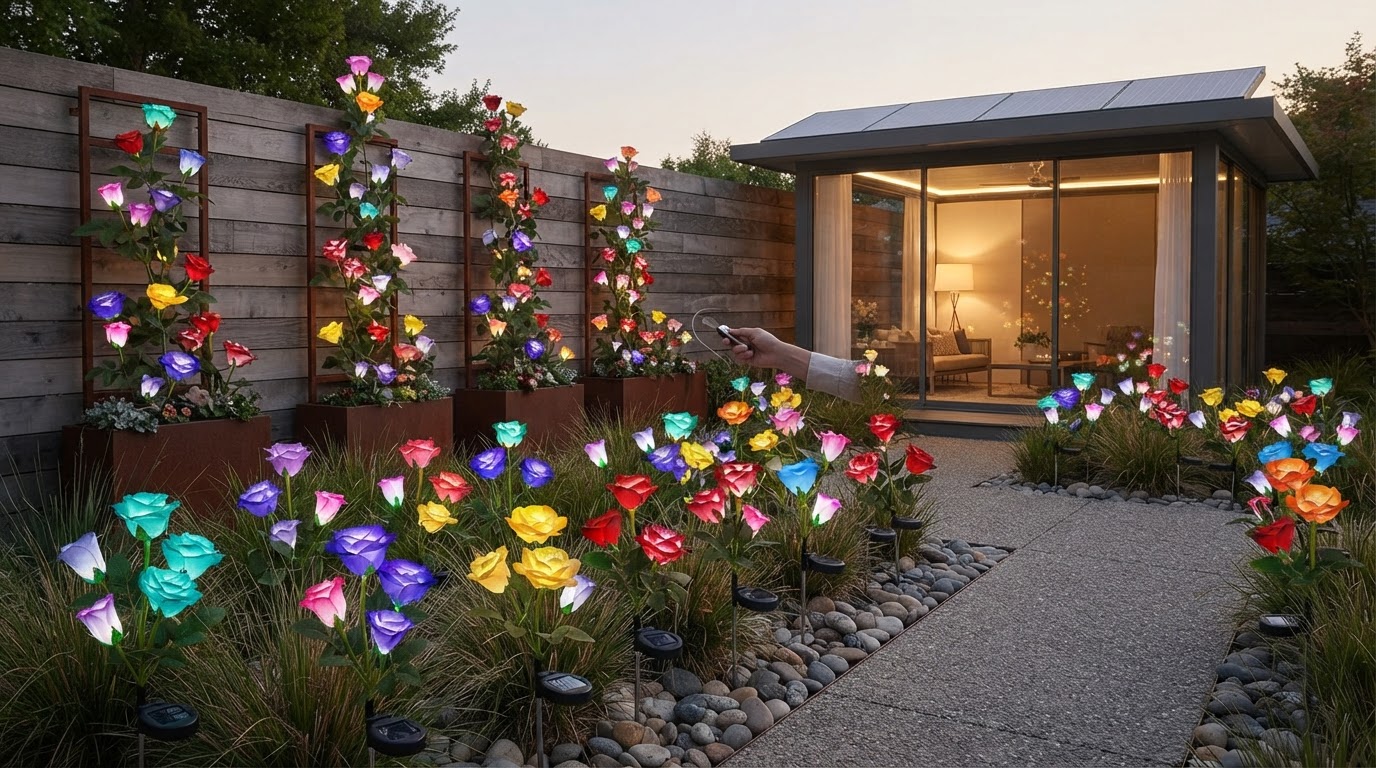
To effectively integrate these luminaries, think of it as a matrix of three distinct axes: Durability, Luminosity, and Composition. The first axis, Durability, is defined by the hardware's ability to withstand environmental stressors. High-quality units feature an IP65 rating, ensuring they remain functional through heavy rain and dust exposure. The second axis, Luminosity, focuses on the balance between the internal LED output and the diffusion provided by the fabric petals. Unlike harsh security floodlights, these roses provide a soft, ambient glow designed for accentuation rather than primary illumination. The final axis, Composition, involves the spatial arrangement of the units to create depth. By varying the height and density of the floral stakes, a garden gains a layered, three-dimensional quality after dusk. The decision rule is straightforward: prioritize higher IP ratings for exposed perimeter areas and focus on petal density for high-visibility zones like patios or entryways. When these three dimensions are aligned, the result is a cohesive environment that transitions seamlessly from daylight to darkness. This structured approach ensures that the decorative elements serve as a sophisticated extension of the home’s architecture rather than a disjointed seasonal addition.
Expert tip: For maximum runtime, ensure the photovoltaic panel is angled at 45 degrees toward the southern sky, as even partial shading from overhanging foliage can reduce the evening glow duration by up to 40 percent.
Integrating these pieces requires a broader look at your outdoor space, such as developing a solar Glow Roses yard art strategy to ensure visual balance. For those concerned about practical applications, understanding how led rose garden lights function for path safety is essential. Furthermore, selecting waterproof solar rose lights ensures the system survives seasonal storms. Many designers are now selecting solar Glow Roses for year-round garden lighting to maintain a consistent aesthetic regardless of the blooming season of natural flora.
Once you see it this way, the transition to a glowing landscape becomes a matter of technical placement rather than guesswork.