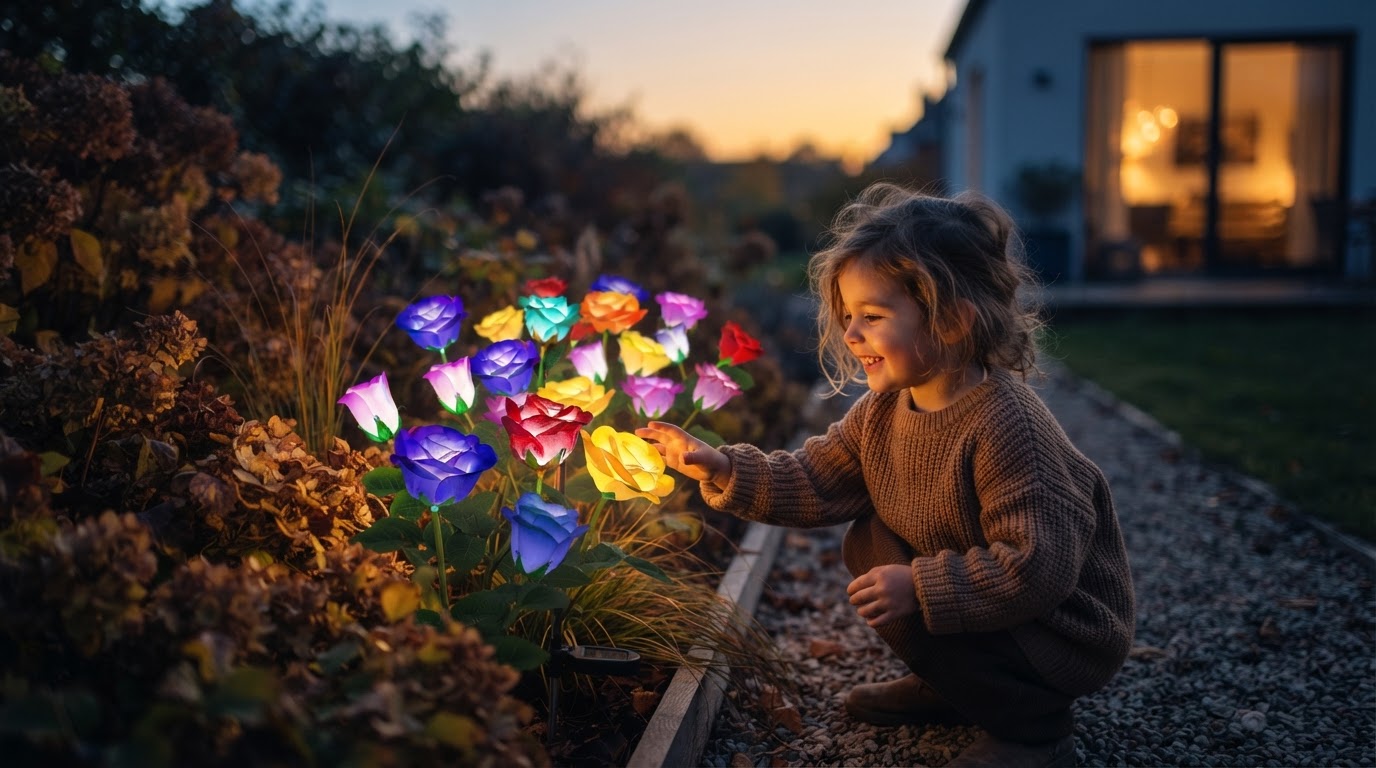
5 Strategic Steps for solar Glow Roses Yard Art
 Maya ChenContributing Editor
September 12, 2026 — The seasonal shift toward autumn typically signals the end of vibrant garden displays, yet solar Glow Roses are currently challenging the necessity of dormant winter landscapes through high-efficiency photoluminescent integration. The conventional wisdom says that artificial floral displays are a compromise in quality, but recent shifts in consumer behavior suggest a move toward permanent, low-maintenance aesthetic installations.
Landscape design principles often prioritize living flora, yet the Department of Energy notes that solar-powered lighting can significantly reduce residential energy footprints when replacing traditional low-voltage wired systems. The challenge lies not in the technology itself, but in the strategic deployment of these units to avoid the cluttered look of haphazardly placed garden ornaments. By treating these as structural elements rather than temporary accessories, homeowners can maintain visual interest throughout the year.
The 5 Strategic Steps
Maximizing the impact of solar Glow Roses requires a departure from the typical "scatter and plant" method. First, assess the light saturation of your designated area; the internal Ni-MH batteries require direct exposure to maintain a consistent 8-to-10-hour discharge cycle. Second, group the roses in odd-numbered clusters to mimic natural growth patterns, which provides a more sophisticated glowing garden decorations effect than single-file lining. Third, consider the height variance; staggering the stems creates depth that prevents the yard art from appearing two-dimensional at night. Fourth, verify the environmental seal. While many products claim weather resistance, ensuring you have waterproof solar rose lights is the only way to prevent internal corrosion during high-humidity months. Finally, integrate these units near reflective surfaces like glass or still water to double the perceived lumen output without increasing energy draw. Run the math: a cluster of three well-placed units provides more ambient visibility than ten units placed in the shadows of heavy foliage. This structured approach ensures that led rose garden lights serve as architectural highlights rather than visual noise. When selecting solar Glow Roses for year-round garden lighting, the focus must remain on the durability of the silk-blend petals and the integrity of the solar housing to withstand UV degradation over multiple seasons.
Expert tip: To ensure maximum runtime, wipe the solar panels with a microfiber cloth every two weeks; even a thin layer of dust can reduce charging efficiency by up to 20%.
Here’s the part nobody talks about: most solar yard art fails not because of the battery, but because of poor positioning relative to evening shadows. I’ll change my mind when automated tracking sensors become standard in consumer-grade garden stakes, but until then, manual placement remains the critical variable.