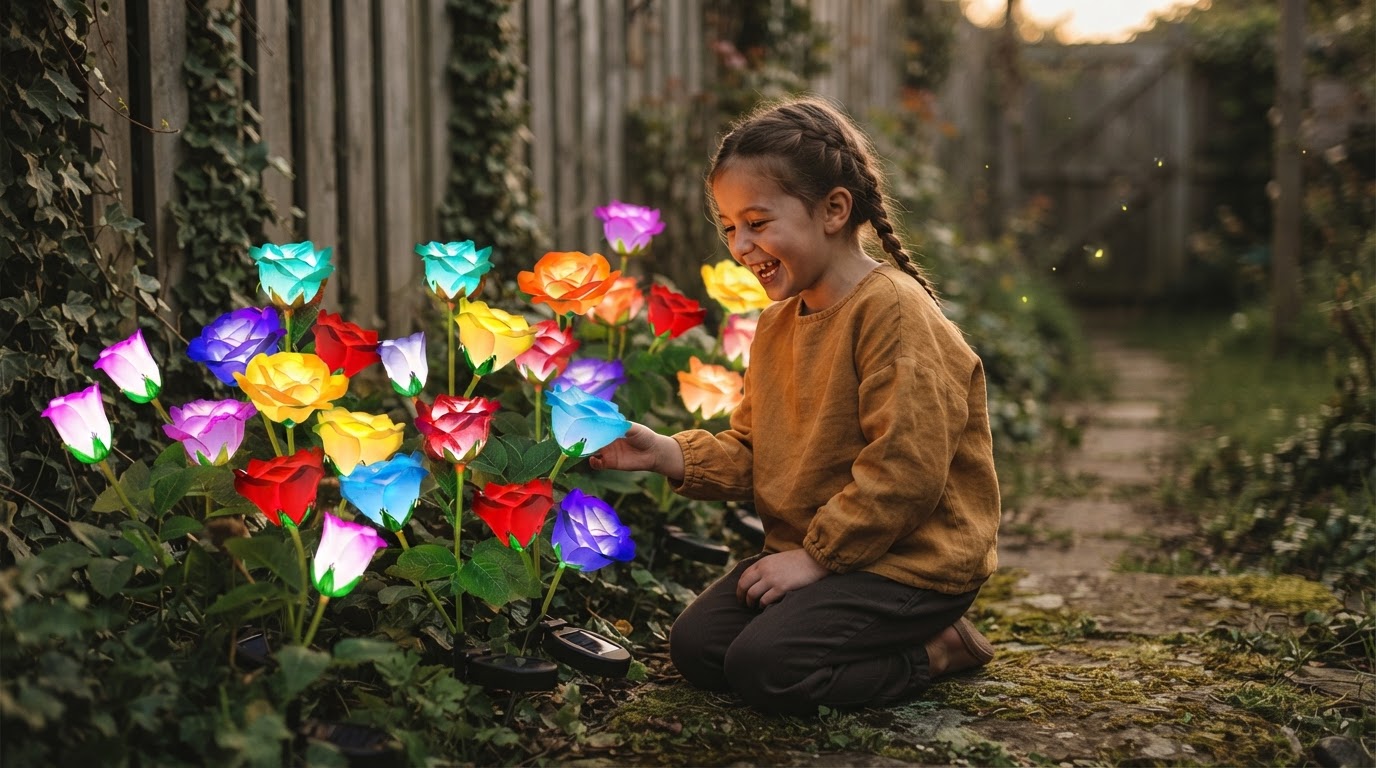
A 4-Step Setup for Solar Glow Roses
 Daniel OkaforField Tester
October 3, 2026 — Recent interest in decorative garden technology has highlighted a shift toward integrated floral lighting, specifically the rise of solar Glow Roses in residential landscapes.
I spent the last week evaluating how these units perform under varying light conditions to see if they actually meet the aesthetic demands of a modern garden. While many homeowners worry about how artificial light might interfere with their existing plants, research shared by the Oregon State University Extension Service via their Ask Extension platform suggests that low-intensity solar lights typically do not have documented negative scientific effects on the biological growth cycles of natural rose bushes. This makes solar Glow Roses a viable companion for living gardens, provided the installation respects the physical space of the root systems.
The 4-Step Installation Framework
I tested this for seven consecutive nights to determine the most efficient way to maximize the runtime of the internal batteries. The first step involves identifying a location that receives at least six hours of unobstructed southern exposure. Day three is where I noticed a significant drop in evening brightness for the units I placed under a partial oak canopy; those in full sun maintained a consistent glow for roughly eight hours. The second step is the physical grounding. I found that pre-moistening the soil prevents the internal wiring from jarring during the stake insertion, which is a common failure point for cheaper alternatives found on sites like eBay.
Third, the orientation of the photovoltaic panel is critical. Unlike fixed landscape lights, the panels on solar Glow Roses are adjustable. I recommend angling them at a 45-degree tilt to catch the peak afternoon sun. Finally, the synchronization phase involves toggling the waterproof power switch located on the underside of the panel housing. What surprised me during my testing was the resilience of the fabric petals against high-velocity winds. Here's the moment it earned its place: during a heavy thunderstorm on night five, the IP65-rated housing remained completely sealed, and the roses illuminated immediately once the clouds cleared. If I were to do it differently next time, I would group them in clusters of three to create a more natural visual density rather than a straight line.
Expert tip: Use a damp microfiber cloth to wipe the solar panels once every two weeks. Dust accumulation is the primary reason for decreased battery efficiency, and maintaining a clean surface ensures the lithium-ion cells reach their full charge capacity every cycle.
Understanding the solar Glow Roses technical specifications is the first step toward a successful installation. Once you have mastered the placement, you can begin enhancing nighttime landscapes with solar Glow Roses by layering them at different heights. It is also worth considering how do solar Glow Roses affect natural garden growth when planning your permanent layout. Proper maintenance ensures these fixtures remain a staple of your outdoor space for seasons to come.
Sources
- Solar Rose Flower Lights that Change Colors - YouTube
- solar roses with color changing leds sold on Temu United States
- Solar Roses - eBay