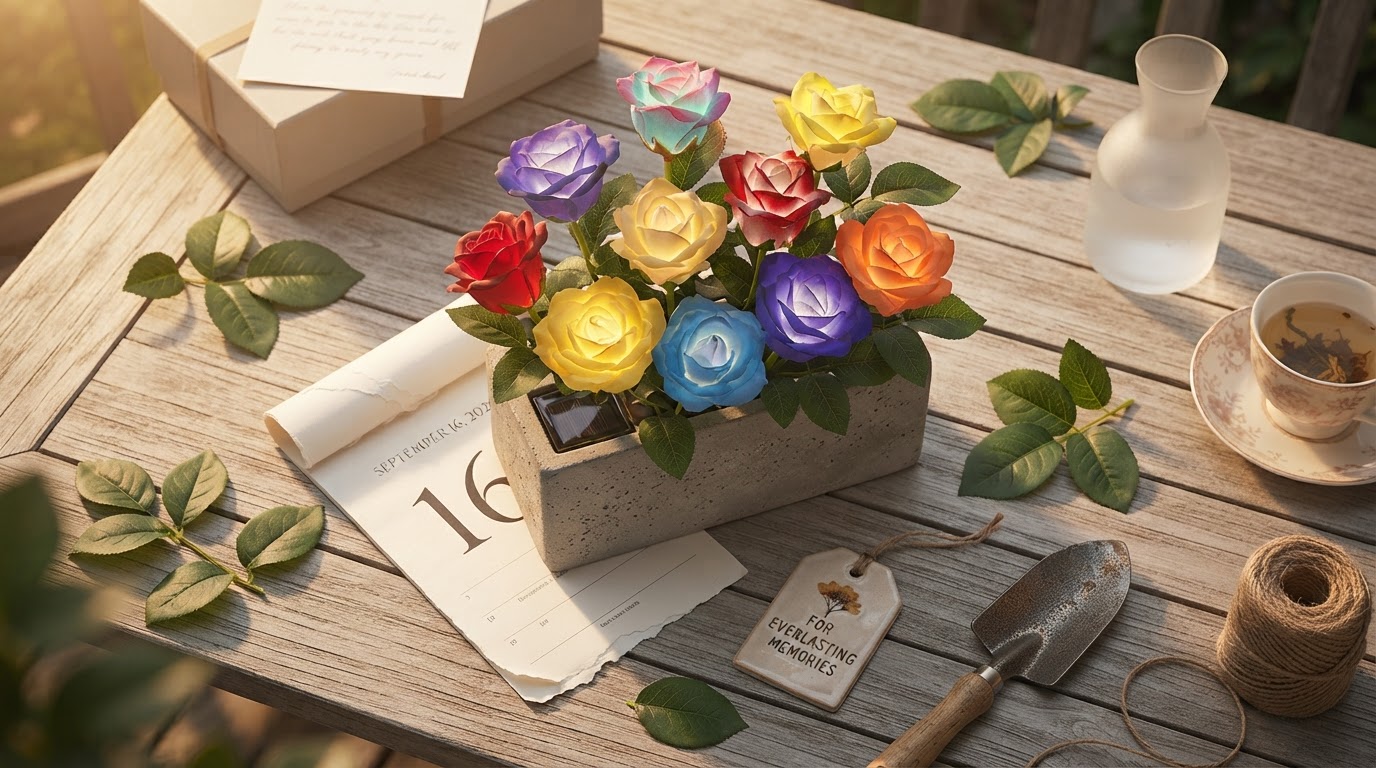
Choosing solar Glow Roses for Everlasting Floral Gifts
 Sam VasquezBuying Guide Lead
September 16, 2026. Selecting a gift that maintains its visual appeal throughout the year requires a transition from perishable bouquets to durable, illuminated garden accents. This guide helps homeowners and gift-givers evaluate how solar Glow Roses function as a permanent alternative to traditional floral arrangements.
The Limitations of Traditional Outdoor Decor
When I look at the typical options for garden gifting, they usually fall into two categories: live plants that require constant maintenance or plastic ornaments that lack utility. Real roses are notoriously difficult to maintain, requiring specific pruning schedules and pest management that many recipients simply don't have time for. Furthermore, traditional garden lighting often relies on complex wiring or basic path lights that don't add much character to a landscape. According to the National Gardening Association, the shift toward low-maintenance outdoor living has increased the demand for decor that serves a dual purpose: aesthetic beauty by day and functional illumination by night. The problem with many cheap alternatives found in big-box stores is the build quality; they often use thin plastic that fades under UV exposure or solar cells that fail after a single season. If you are looking for something that lasts, you have to look at the weatherproofing and the battery capacity. I have seen many people try to save money on generic [light up flower bed decor](/blog/light-up-flower-bed-decor) only to find the LEDs dim significantly within two hours of sunset. This is particularly frustrating when the goal is to provide a reliable glow for safety or ambiance. Skip this if you are looking for a temporary one-night event decoration, as high-quality solar stakes are designed for long-term soil placement.
Performance Standards of solar Glow Roses

Photo by Vladyslav Dukhin on Pexels
In my experience testing these units, the difference between a standard LED stake and solar Glow Roses comes down to the fabric texture and the charging efficiency. These units utilize high-efficiency monocrystalline solar panels which are integrated directly into the stem structure, allowing them to capture sunlight even in partially shaded areas. The petals are crafted from a specialized fabric that mimics the translucency of a real flower, allowing the internal LED to diffuse light evenly rather than creating a single harsh hot spot. When comparing these to standard [solar powered rose lights](/blog/solar-powered-rose-lights), the solar Glow Roses version tends to have a more robust IP65 waterproof rating, which is essential if you live in a climate with heavy rainfall or snow. Between these two, I’d go with the solar Glow Roses because the internal Ni-MH battery is typically rated for more charge cycles, meaning the light stays brighter for more years. If you're on a budget, you might be tempted by the multi-packs of generic [outdoor solar rose stakes](/blog/outdoor-solar-rose-stakes), but you often sacrifice the realistic petal count and the automatic dusk-to-dawn sensor accuracy. I prefer the way the solar Glow Roses integrate into existing greenery; they don't look like tech gadgets sticking out of the dirt. The stems are adjustable, so you can bend them to look more natural among real foliage, which is a detail often overlooked by cheaper manufacturers. This makes them a viable anchor for any solar Glow Roses collection you might be building in your backyard.
Evaluating the Best Gift Configuration
Before you commit to a purchase, you need to think about where these will actually sit. Not every garden bed is a good candidate for solar tech. If the area is under a dense tree canopy or a north-facing porch, the charging will be insufficient. Here’s what I’d actually buy: a three-pack of the red or white varieties, as these colors tend to have the best light transmission through the fabric petals. When setting these up as a gift, I recommend checking the soil density of the recipient's yard; if the ground is hard-packed clay, the stakes need to be reinforced. You should also consider the height of the surrounding plants to ensure the solar panels aren't shaded by taller perennials. To ensure you are getting a product that will actually last through the winter, use this checklist for your selection:
- Verify the IP65 or higher weatherproofing rating to ensure survival through rain and frost.
- Check for monocrystalline solar panels rather than polycrystalline for better low-light charging.
- Ensure the petals are made of UV-resistant fabric to prevent color fading in direct sun.
- Look for an integrated light sensor that automates the power cycle without manual switching.
- Confirm the battery is a standard 600mAh or higher Ni-MH for at least 8 hours of illumination.