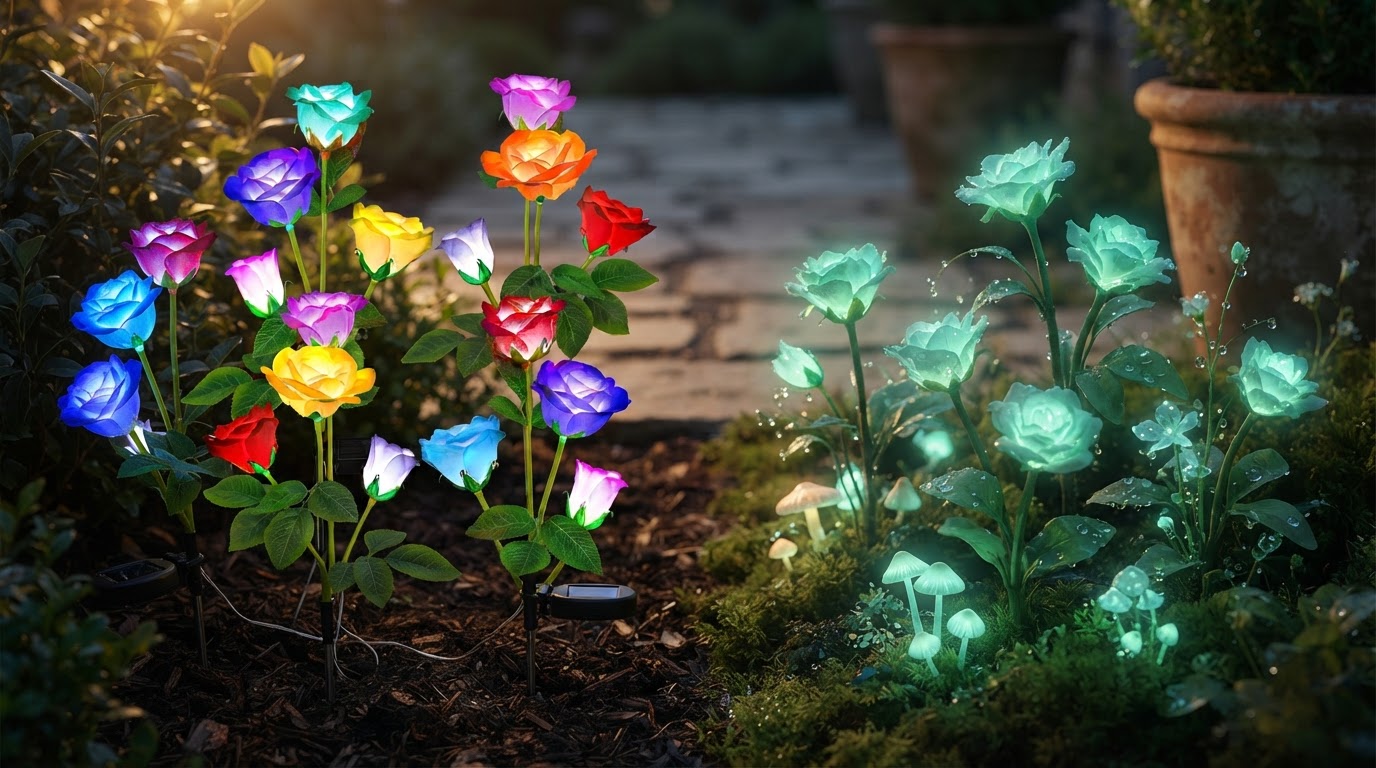
Comparing solar Glow Roses to Bioluminescent Flora
 Priya RamanSenior Analyst
September 24, 2026 — The rising consumer interest in glowing outdoor flowers has created a distinct market intersection between synthetic solar technology and experimental botany, where solar Glow Roses now offer a high-intensity alternative to biological luminescence. While traditional garden lighting relied on wired fixtures, the emergence of self-sustaining light sources has shifted the landscape toward autonomous, decorative solutions. According to Light Bio, the Firefly Petunia represents the world's first bioluminescent plant, utilizing its own living energy to emit a soft, moonlight-colored glow from within its cells. This biological breakthrough provides a natural, albeit subtle, radiance that contrasts sharply with the functional output of solar-powered hardware.
The Three-Axis Illumination Framework
When evaluating glowing outdoor flowers, two axes matter here: the intensity of the light output and the duration of the effect. Think of it as a matrix of biological versus mechanical energy. The first axis is luminosity. Bioluminescent plants, such as the Firefly Petunia, emit a soft green light that is visible primarily in total darkness, appearing white during daylight hours. In contrast, solar Glow Roses utilize integrated photovoltaic cells to power high-efficiency LEDs, providing a significantly higher lumen count that can define garden paths or illuminate surrounding foliage. The second axis is reliability. Solar Glow Roses are engineered to store energy throughout the day, ensuring consistent performance regardless of the plant's biological health, provided they are placed according to a solar Glow Roses placement guide. The third axis is maintenance. While biological options require specific soil conditions and watering to sustain their light-producing metabolism, solar models focus on weather resistance. Understanding how to manage waterproof solar rose lights during heavy rain ensures the internal circuitry remains protected, a factor not applicable to living tissue. This hardware-based approach also allows for more diverse aesthetic applications, such as solar yard art roses, which function as permanent sculptural elements. The decision rule: choose bioluminescence for subtle, naturalistic observation, and opt for solar Glow Roses when the objective is functional outdoor decor that mimics the appearance of real flora while providing superior light intensity. This distinction becomes even clearer when comparing solar Glow Roses to LED flower garden decor, where the emphasis shifts from biological novelty to durable, year-round performance.
Expert tip: To maximize the lifespan of your solar Glow Roses, wipe the small photovoltaic panel located on the stem with a damp cloth every two weeks to prevent dust buildup from reducing charging efficiency.
Once you see it this way, the choice between living bioluminescence and solar-powered hardware becomes a matter of balancing natural subtlety with reliable garden illumination.
Sources
- Glow in the dark flowers - YouTube
- Glow-in-the-dark flowers? Guess what… they're a real thing. Meet the ...
- Get your glow on with the world's fist naturally glowing flower! - Instagram