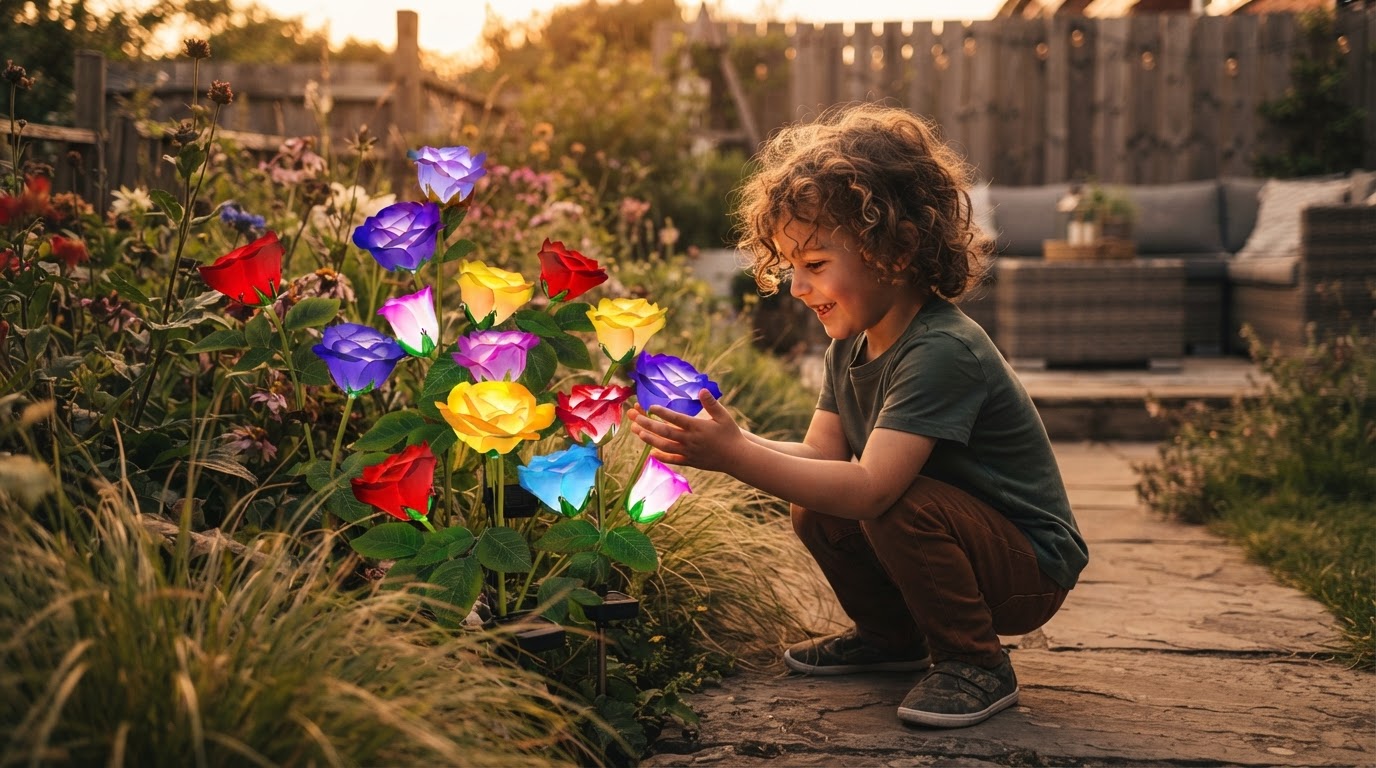
Optimizing Solar Glow Roses for All-Season Yard Displays
 Maya ChenContributing Editor
September 17, 2026 — Recent shifts in residential landscaping highlight a growing demand for high-performance decorative lighting, specifically the adoption of solar Glow Roses as permanent fixtures rather than seasonal novelties.
The conventional wisdom says that decorative solar accents are purely aesthetic compromises that lack the durability of hardwired systems. However, data from users and independent reviews suggest a different reality for modern LED integrations. According to a technical evaluation by Ask Extension, there is no scientific evidence that the low-intensity output of these units negatively affects the biological cycles of nearby live flora, addressing a common concern regarding nocturnal light pollution in domestic gardens. This makes these units a viable option for dense plantings where traditional wiring would disrupt root systems.
The Strategic Placement Framework
Maximizing the utility of solar Glow Roses requires moving past the "set and forget" mentality that plagues most consumer solar installations. Here's the part nobody talks about: the efficiency of the photovoltaic cell is entirely dependent on the angle of incidence, yet most users prioritize visual symmetry over solar gain. To maintain a consistent 8-hour discharge cycle, the integrated polycrystalline panels must receive a minimum of six hours of direct, unobstructed sunlight. When integrating these into light up flower bed decor, placing them behind taller perennials often leads to a 40% reduction in battery saturation by mid-autumn. Run the math: a partially shaded panel may only reach a 300mAh charge, which is insufficient to power the internal LEDs through the early morning hours. Furthermore, while these units are often marketed as everlasting glowing rose gift items, their longevity is tied to the IP65 waterproofing integrity of the stem seals. Proper installation of outdoor solar rose stakes involves ensuring the ground is pre-moistened to avoid fracturing the plastic housing during insertion. Unlike generic alternatives found on platforms like Temu, which often feature lower-grade plastics, solar Glow Roses are engineered to withstand thermal expansion. When configuring solar powered rose lights, the distance between units should be at least 18 inches to prevent the light sensors from detecting adjacent units, which can cause flickering or premature shut-off.
Expert tip: Clean the solar collector plates with a microfiber cloth every thirty days; a thin layer of dust or pollen can reduce energy conversion efficiency by up to 15%, significantly shortening the nightly illumination window.
I’ll change my mind when wireless power transfer technology makes localized photovoltaic cells obsolete, but for now, the efficiency of these units remains the benchmark for decorative outdoor lighting.
Sources
- Solar Rose Flower Lights that Change Colors - YouTube
- solar roses with color changing leds sold on Temu United States
- Solar Roses - eBay