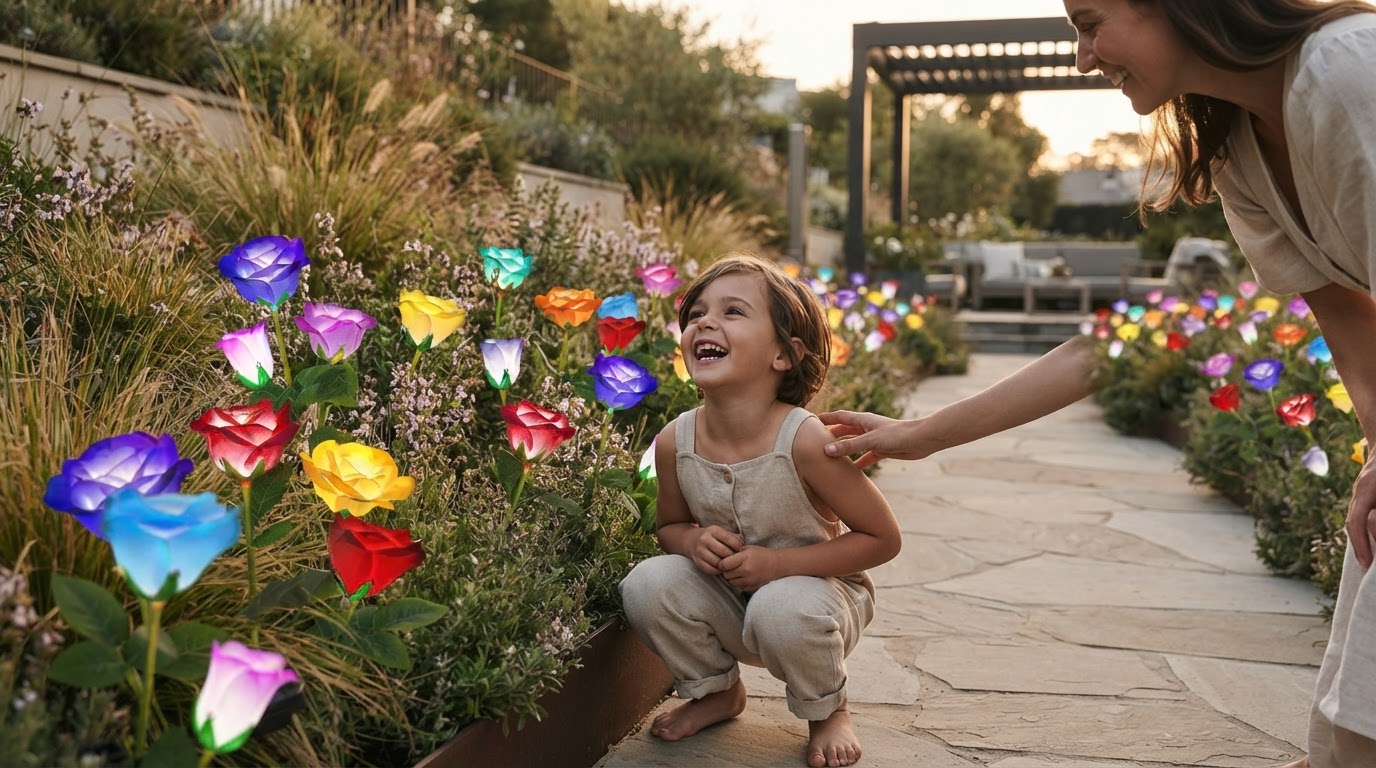
A 3-Point Framework for solar Glow Roses Placement
 Priya RamanSenior Analyst
October 19, 2026 — The rising demand for sustainable garden accents has shifted focus toward precision placement of solar Glow Roses to ensure consistent nighttime illumination. As landscape architects integrate solar powered rose lights into high-end residential projects, the technical requirements for battery saturation and visual balance have become paramount. According to TYB Lighting, these fixtures successfully combine realistic floral aesthetics with advanced LED technology, creating a functional bridge between natural landscaping and eco-friendly decorative lighting.
The Triple-Axis Placement Model
Optimizing solar Glow Roses requires a structured approach to environmental variables. Once you see it this way, the process becomes a technical calibration rather than a decorative guess. The decision rule centers on a three-axis model: Solar Saturation, Visual Density, and Moisture Safety. The first axis, Solar Saturation, dictates that the integrated panels require approximately six to eight hours of direct sunlight to achieve full discharge capacity at night. The second axis, Visual Density, balances the quantity of roses to prevent visual clutter; a common configuration involves a 6-pack of 5 lighted roses each, totaling 30 individual blooms for a standard garden border. The third axis, Moisture Safety, ensures that while the units are weather-resistant, they are not submerged in areas of poor drainage.
Think of it as a matrix of performance and aesthetics. If the light is placed too deep in the shade of a canopy, the internal battery will fail to trigger the automated dusk sensor effectively. Conversely, placing them in open, high-exposure zones ensures the solar powered rose lights maintain their intended glow duration. When optimizing solar Glow Roses for modern landscape design, the goal is to align the solar panel’s orientation with the seasonal solar path. This ensures that even as the sun moves lower in the autumn sky, the roses receive sufficient energy to power their color-changing cycles. Understanding [how do solar Glow Roses perform in various weather conditions](/blog/solar-glow-roses-weather-performance) is the final layer of this framework, as placement must account for wind exposure and local precipitation patterns to preserve the 14-inch stem integrity and panel clarity.
Expert tip: To maximize the lifespan of your solar Glow Roses, wipe the solar panel with a damp microfiber cloth every two weeks to prevent dust buildup from reducing charging efficiency by up to 20%.
Properly positioned solar powered rose lights serve as both a safety feature for walkways and a sophisticated visual anchor for nighttime gardens. By following this three-axis model, homeowners can ensure their investment provides reliable illumination throughout every season.
Sources

- Rose Color Changing Solar Stake Lights, Set of 2 Flower ...
- Solar Rose Flower Lights that Change Colors
- 2/4PACK Solar Power Rose Flower Lights Outdoor Garden ...