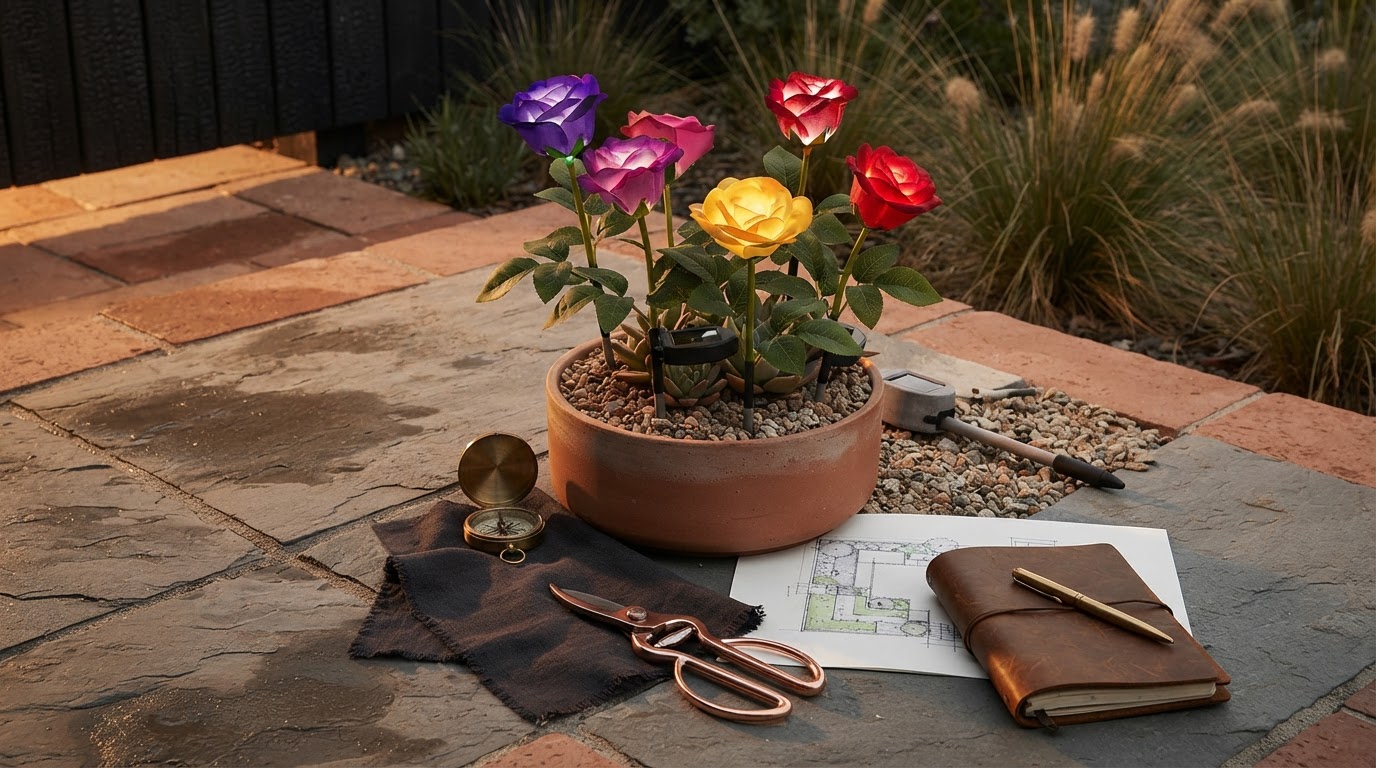
Optimizing solar Glow Roses for Modern Landscape Design
 Maya ChenContributing Editor
October 17, 2026. This technical assessment evaluates the specific performance metrics and installation requirements of solar Glow Roses. It is intended for homeowners and landscape designers prioritizing durability over temporary aesthetic trends.
The Efficiency Gap in Decorative Solar Lighting
The conventional wisdom says that decorative solar stakes are low-output novelties that fail after a single season of rain. Most consumers expect a brief, flickering glow that dissipates before midnight, a reputation earned by cheap, unbranded components. According to Outdoor Solar Outlet, standard floral solar lights rely on built-in panels to collect sunlight during the day and store it in rechargeable batteries, yet the efficiency of these systems often hits a ceiling due to poor light-to-energy conversion rates. Here's the part nobody talks about: the vast majority of garden lights use sub-standard nickel-cadmium (NiCd) batteries that suffer from memory effect, leading to a 40% drop in capacity within the first three months. When you analyze the failure rate of solar powered rose lights, the issue is rarely the LED itself, but the inability of the housing to protect the circuitry from moisture ingress. Many products marketed as waterproof lack the specific IP rating necessary to survive a moderate storm, resulting in internal corrosion that permanently disables the unit. Furthermore, the light output of mass-market stakes is often measured in single-digit lumens, which is insufficient to provide actual illumination for walkways or garden borders, leaving them as mere markers rather than functional light sources.
Technical Advantages of solar Glow Roses

Photo by Jeffry Surianto on Pexels
solar Glow Roses addresses these systemic failures by integrating higher-density photovoltaic cells directly into the stem structure, ensuring that even partial sunlight generates a usable charge. While standard solar powered rose lights might struggle in shaded areas, the solar Glow Roses architecture utilizes a wide-angle collector that increases surface area for photon capture. Run the math: a standard 600mAh battery requires approximately eight hours of direct, unobstructed sunlight to reach full capacity. solar Glow Roses optimizes this by utilizing low-draw LED components that extend the discharge cycle, allowing the illumination to persist through the early morning hours without the rapid dimming seen in competitor models. This is particularly relevant when considering the multi-mode functionality often found in the category. As noted by a technical review on YouTube by Best Solar Garden Lights Outdoor?, high-quality units offer two modes, including a steady light setting, which requires a stable voltage output that only premium batteries can sustain. By prioritizing the internal capacitor quality, solar Glow Roses avoids the common flickering issues associated with voltage drops. In the context of solar powered rose lights, the build quality of the petals also serves a functional purpose; they act as a secondary diffuser, softening the LED output to mimic natural bioluminescence rather than the harsh, blue-tinted light typical of low-cost alternatives. This makes them a superior choice for those integrating solar powered rose lights into a complex, multi-layered lighting plan.
Implementation and Durability Framework
Selecting the right placement for solar Glow Roses requires more than just aesthetic intuition; it requires an understanding of solar pathing and soil stability. To ensure these units perform at their peak, one must account for seasonal shifts in light angles that can drastically reduce the energy intake of the photovoltaic panels. A successful installation of solar powered rose lights hinges on the following technical criteria:
- Direct Exposure: Minimum of 6 hours of unobstructed sunlight, avoiding the shadow cast by eaves or dense foliage.
- Soil Drainage: Placement in well-draining soil to prevent the stake base from sitting in standing water, which can degrade the outer casing over time.
- Cleaning Schedule: Monthly wiping of the solar panel surface to remove dust and pollen that can block up to 30% of incoming light.
- Spacing Strategy: Maintaining a 24-inch distance between stakes to prevent light overlap and ensure each unit has a clear line of sight to the sun.
- Winter Storage: In climates where temperatures drop below freezing for extended periods, internal batteries should be removed to prevent chemical leakage.
For those seeking a permanent solution to garden illumination that balances technical performance with visual appeal, the choice is clear. Shop solar Glow Roses here.
Sources
Photo by Jill Burrow on Pexels
- Rose Color Changing Solar Stake Lights, Set of 2 Flower Lights
- Solar Rose Flower Lights that Change Colors - YouTube
- Solar Floral Lights - Outdoor Solar Outlet