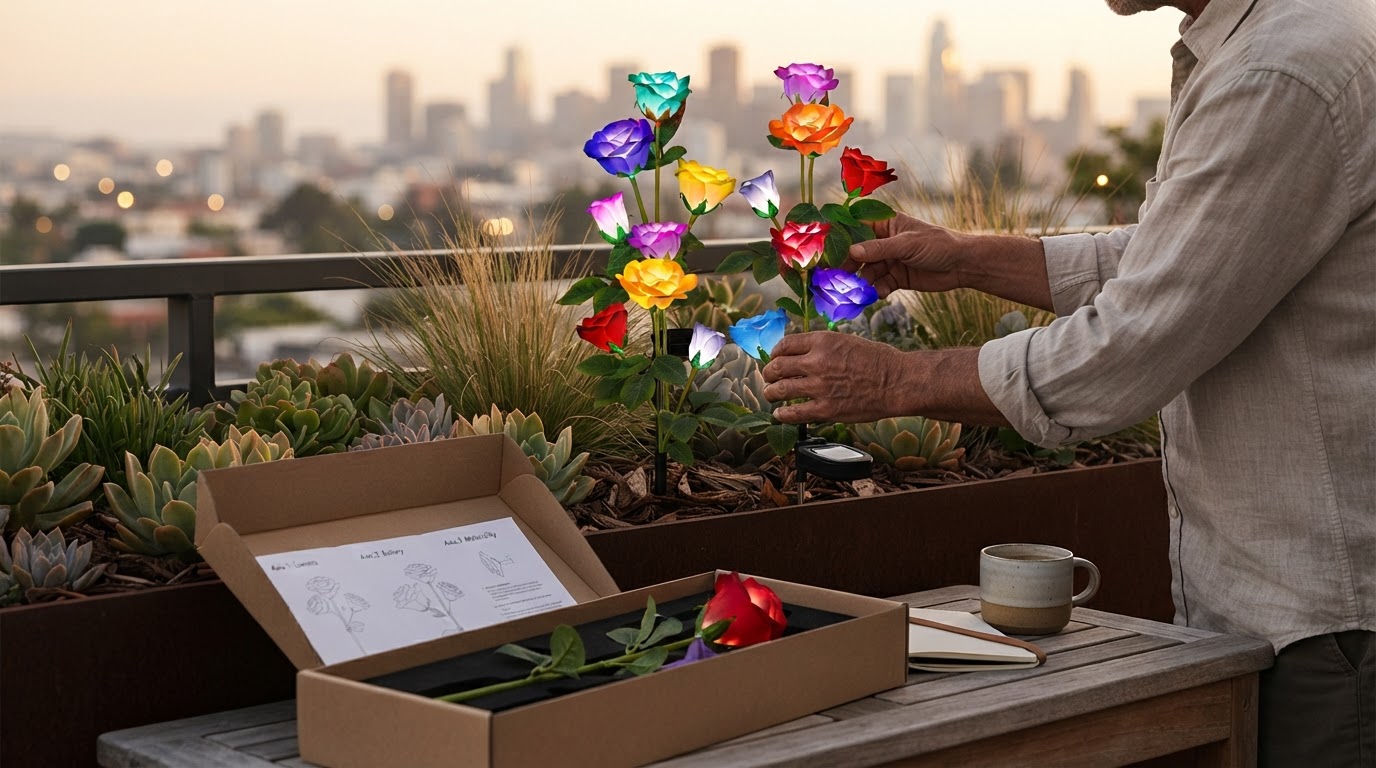
A 3-Axis Evaluation of solar Glow Roses Performance
 Priya RamanSenior Analyst
September 9, 2026 — The recent surge in solar Glow Roses adoption reflects a broader shift toward integrating decorative botanical lighting into sustainable landscape architecture. While traditional lighting often requires invasive wiring, these self-contained units offer a modular approach to aesthetic illumination. According to a technical overview by the Ask Extension service at Oregon State University, while there is no scientific evidence that low-intensity solar lights negatively affect the growth cycles of living rose bushes, their placement remains a critical factor for both battery health and visual impact.
The Three-Axis Performance Framework
To evaluate the efficacy of solar Glow Roses, we utilize a three-axis model: Durability, Luminosity, and Botanical Integration. Think of it as a matrix of functional utility versus aesthetic harmony. On the durability axis, these units are engineered with IP65 weatherproofing, ensuring resilience against rain and humidity that typically compromises lower-grade electronics. The luminosity axis is defined by the internal LED drivers which, as noted by reviewers on eBay, provide high-visibility color-changing capabilities that distinguish these stakes from static white lights. Finally, the botanical integration axis measures how well the silk-fabric petals mimic natural flora during daylight hours.
Two axes matter here for the long-term user: the charge-to-discharge ratio and the structural integrity of the stake. A single day of direct sunlight typically yields eight to ten hours of evening illumination. The decision rule is simple: if the target area receives fewer than six hours of unobstructed light, the luminosity axis will underperform, regardless of the unit's internal battery capacity. Once you see it this way, it becomes clear that solar Glow Roses are not merely ornaments but functional light-harvesting tools. When planning a layout, it is helpful to understand how do solar Glow Roses compare to standard LED decor? to ensure the light intensity matches your existing outdoor solar rose stakes. Proper execution requires balancing these units with light up flower bed decor to avoid visual clutter. Furthermore, following glowing outdoor flowers strategies ensures that the placement maximizes the solar intake required for the internal Ni-MH batteries.
Expert tip: To maintain the IP65 integrity and ensure maximum light absorption, wipe the solar panel surface with a damp microfiber cloth every thirty days to remove pollen and dust buildup that can reduce charging efficiency by up to 20%.
Navigating the transition from traditional garden ornaments to active lighting elements requires a focus on build quality and placement logic. By prioritizing units that balance fabric realism with robust solar conversion rates, homeowners can achieve a sophisticated nocturnal landscape.
Sources
Photo by Elle Hughes on Pexels
- Solar Rose Flower Lights that Change Colors - YouTube
- solar roses with color changing leds sold on Temu United States
- Solar Roses - eBay