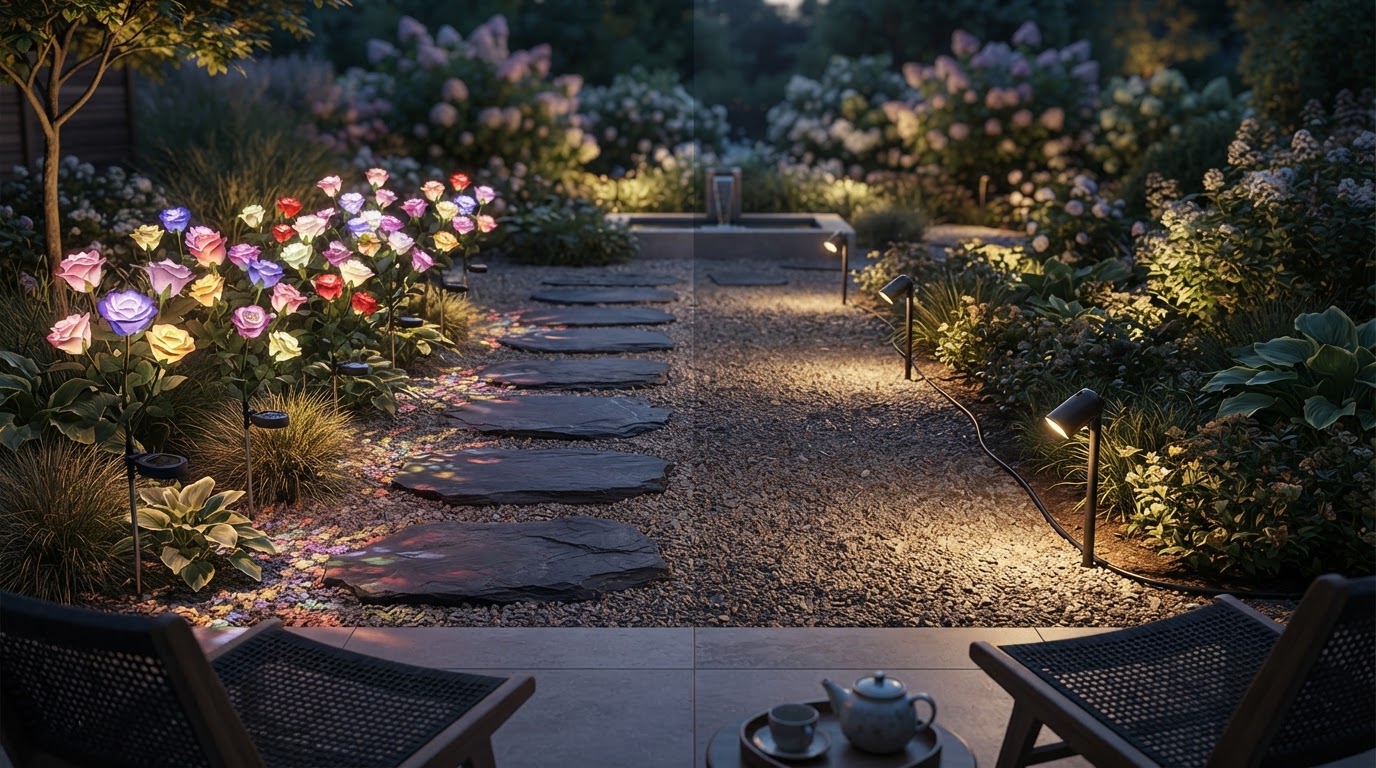
Evaluating solar Glow Roses for Modern Outdoor Lighting
 Priya RamanSenior Analyst
October 4, 2026 — The rising demand for low-maintenance garden accents has positioned solar Glow Roses as a primary choice for homeowners seeking to blend botanical aesthetics with renewable energy technology.
While traditional garden lighting often requires complex wiring or invasive installation, solar Glow Roses utilize integrated photovoltaic cells to power internal LED arrays. This shift toward self-contained units has been widely documented by market observers; for instance, eBay reports significant consumer interest in waterproof LED rose lighting, noting consistent demand for multi-pack configurations that offer both aesthetic value and weather resistance. As consumers transition away from incandescent path lights, understanding the specific performance metrics of these floral-inspired fixtures becomes essential for maintaining a cohesive nighttime environment.
The Three-Axis Performance Framework
To accurately assess the utility of solar Glow Roses, we utilize a three-axis model: luminous intensity, structural durability, and spectral range. Think of it as a matrix of functional utility versus aesthetic impact. The first axis, luminous intensity, determines how effectively the fixture illuminates surrounding foliage. While standard solar accents often struggle with dimness, solar Glow Roses are engineered to provide a soft, ambient radiance that highlights the petal structure without overwhelming the natural landscape. The second axis involves structural durability. High-quality models feature IP65-rated waterproofing, ensuring that the internal circuitry remains protected during heavy rainfall or irrigation cycles. Finally, the spectral range refers to the color temperature of the LEDs. While some variants offer fixed warm-white tones, others incorporate RGB color-changing cycles, a feature frequently highlighted in product demonstrations on platforms like YouTube where neighbors and hobbyists showcase their color-shifting garden displays. Two axes matter here: the duration of the light cycle and the recharge efficiency. A well-placed unit requires approximately six to eight hours of direct sunlight to provide eight to ten hours of nighttime illumination. Once you see it this way, the distinction between a temporary novelty and a permanent landscape fixture becomes clear. The decision rule is simple: prioritize units with reinforced stems and high-conversion silicon solar panels to ensure longevity across multiple seasons.
Expert tip: To maximize the lifespan of your solar Glow Roses, ensure the solar panel is wiped clean of dust and pollen every thirty days, as even a thin layer of debris can reduce charging efficiency by up to 20%.
Properly integrating these fixtures involves more than just placement; understanding how do solar Glow Roses affect natural garden growth? ensures that your artificial lighting does not interfere with the biological needs of your living plants. For those new to the technology, following a 4-step setup for solar Glow Roses will guarantee optimal panel orientation. Once installed, enhancing nighttime landscapes with solar Glow Roses allows for creative zoning within the garden, while regular maintenance as outlined in the solar Glow Roses setup guide will keep the display consistent year-round.
According to the Ask Extension service, there is currently no scientific evidence suggesting that low-intensity solar lights negatively impact the health of traditional rose bushes, making them a safe addition to existing flower beds.
Sources
- Solar Rose Flower Lights that Change Colors - YouTube
- solar roses with color changing leds sold on Temu United States
- Solar Roses - eBay